Data Centers Under Pressure: Energy, Geopolitics, and the Future of Digital Infrastructure
The invisible backbone of our digital world, data centers, are at a critical juncture. Surging demand from AI, coupled with energy crises, geopolitical instability, and environmental pressures, is forcing unprecedented innovation and revealing deep vulnerabilities across the globe. This report explores the multifaceted challenges and radical solutions shaping the future of data infrastructure.
Data Centers Under Pressure: Energy, Geopolitics, and the Future of Digital Infrastructure
Data centers, the silent workhorses powering everything from streaming movies to advanced AI models, are facing an unprecedented confluence of challenges. While demand for their services continues to skyrocket – driven largely by the insatiable appetite of artificial intelligence – the infrastructure itself is buckling under the strain of energy scarcity, geopolitical tensions, and environmental scrutiny. This complex interplay is forcing a re-evaluation of how, where, and why we build the digital backbone of our world.
The AI Boom Meets Energy Reality
The most prominent driver of data center expansion is the AI revolution. Companies like AMD are experiencing historic growth, with CEO Lisa Su announcing Q3 2026 as "the largest and most profitable in our history," largely fueled by its data center business, which is projected to hit a record $17 billion next quarter [Source 2]. This immense demand for processing power translates directly into a colossal demand for electricity. Modern AI training models require vast computational resources, consuming energy equivalent to small cities.
However, this exponential energy demand is clashing head-on with an already strained global power grid. Data center builders are facing years-long waits for grid access and new turbine installations. This desperation is leading to unusual, and often less efficient, solutions. TechCrunch reports that some data centers are now turning to once-discarded jet engines as temporary power sources [Source 3]. While these gas turbines can provide quick power, they are typically less efficient and more environmentally damaging than modern utility-scale power plants, highlighting the difficult trade-offs being made.
Beyond direct energy supply, local politics are also playing a significant role. The recent Texas gubernatorial election, for instance, has sent ripples through AI stock markets, with concerns that a new administration might introduce policies less favorable to data center development, potentially impacting energy availability or regulatory environments [Source 1]. This underscores how local political landscapes can profoundly influence the global tech infrastructure footprint.
Geopolitical Flashpoints and Physical Security
As data centers become increasingly critical national infrastructure, they also become strategic targets in geopolitical conflicts. The ongoing conflict in Eastern Europe provides a stark example. Ars Technica reveals that Ukraine's successful drone strikes are spurring hasty Russian plans for underground data centers [Source 5]. Russia is reportedly looking to hide its exposed digital infrastructure, potentially repurposing old mines or building new subterranean facilities to protect against physical attacks. This move illustrates a costly and complex adaptation to modern warfare, where digital assets are as vulnerable as physical ones, and their protection is paramount for national security.
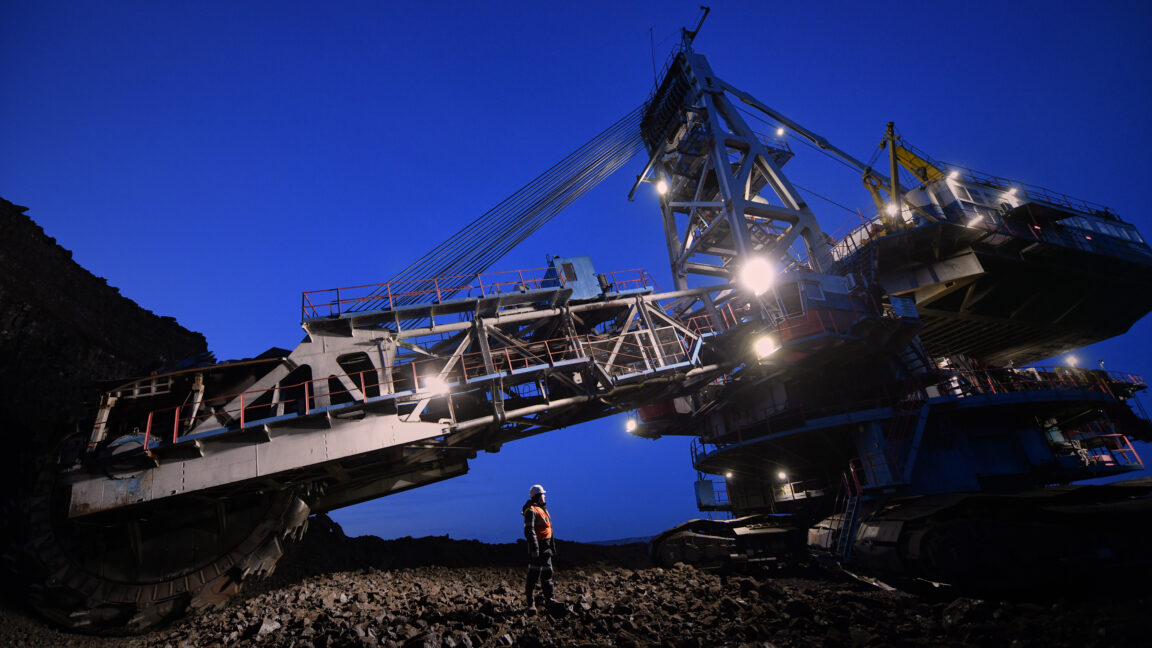
Russia is exploring underground solutions, like repurposing old mines, to protect its critical data infrastructure from drone attacks.
This shift towards hardened, geographically dispersed, or even underground facilities adds significant cost and complexity to data center construction and operation. It also raises questions about the future resilience and accessibility of data in an increasingly fractured and conflict-prone world.
The Surprising Resurgence of Analog for Digital Archiving
The AI boom isn't just about processing power; it's also about an unprecedented volume of data. Training large language models requires petabytes, sometimes exabytes, of data. This demand is not only for active, high-speed storage but also for long-term, cost-effective archiving. Surprisingly, this has led to a resurgence of an older technology: magnetic tape.
Fujifilm, a company traditionally known for photography, is now boosting its tape production fivefold to meet the soaring demand for archiving [Source 6]. While seemingly anachronistic in an age of SSDs and cloud storage, tape offers distinct advantages for cold data: it's incredibly dense, durable, and, crucially, highly energy-efficient when not actively being accessed. For the vast datasets required for AI training, compliance, and long-term historical records, tape provides a compelling blend of low cost per terabyte and minimal energy consumption, making it a sustainable choice for the immense data footprints generated by AI.
Looking to the Stars: The Future of Infrastructure
The escalating challenges on Earth – from energy scarcity to geopolitical risks and limited real estate – are even prompting visionary discussions about extraterrestrial data centers. While still highly speculative, breakthroughs in space manufacturing are laying the groundwork for such audacious ideas. Orbital Matter recently achieved a significant milestone by 3D-printing the first rigid beam in the vacuum of space [Source 4]. This capability is crucial for building large structures off-planet, potentially enabling future space-based data centers that could harness abundant solar energy without terrestrial constraints or geopolitical interference.
While space data centers remain decades away, their very conception highlights the growing pressure on Earth-bound infrastructure and the lengths to which humanity might go to meet its insatiable demand for computation and data storage. They represent the ultimate distributed, resilient, and perhaps energy-independent solution, far removed from the terrestrial squabbles over power grids and land use.
Implications for a Digital Future
The pressures on data centers are fundamentally reshaping the digital landscape. We are moving towards an era where:
* Energy efficiency and self-sufficiency will be paramount, driving innovation in cooling, power generation, and storage solutions.
* Resilience and physical security will be designed in from the ground up, with distributed architectures and hardened facilities becoming the norm.
* Hybrid approaches combining cutting-edge processors with legacy, energy-efficient storage will become more common, optimizing for both performance and sustainability.
* Geopolitical considerations will heavily influence data center siting and supply chain decisions, potentially leading to more localized or regionally diversified infrastructure.
The future of data infrastructure is not just about faster chips or bigger clouds; it's about navigating a complex web of environmental, political, and technological challenges. The solutions will be diverse, ranging from underground bunkers to orbiting platforms, all striving to keep pace with an ever-expanding digital world.
Sources
- AI stocks slide as Texas governor result raises data center risks
- AMD rides data center riches to ‘largest and most profitable’ quarter in history
- Data centers are turning to old jet engines as the wait for power grows
- Orbital Matter 3D-printed the first rigid beam in the vacuum of space
- Ukraine’s drone strikes spur hasty Russian plans for underground data centers
- Fujifilm to boost tape production 5x as AI fuels archiving demand