Robots Push Boundaries: From Underwater Exploration to Space Tourism
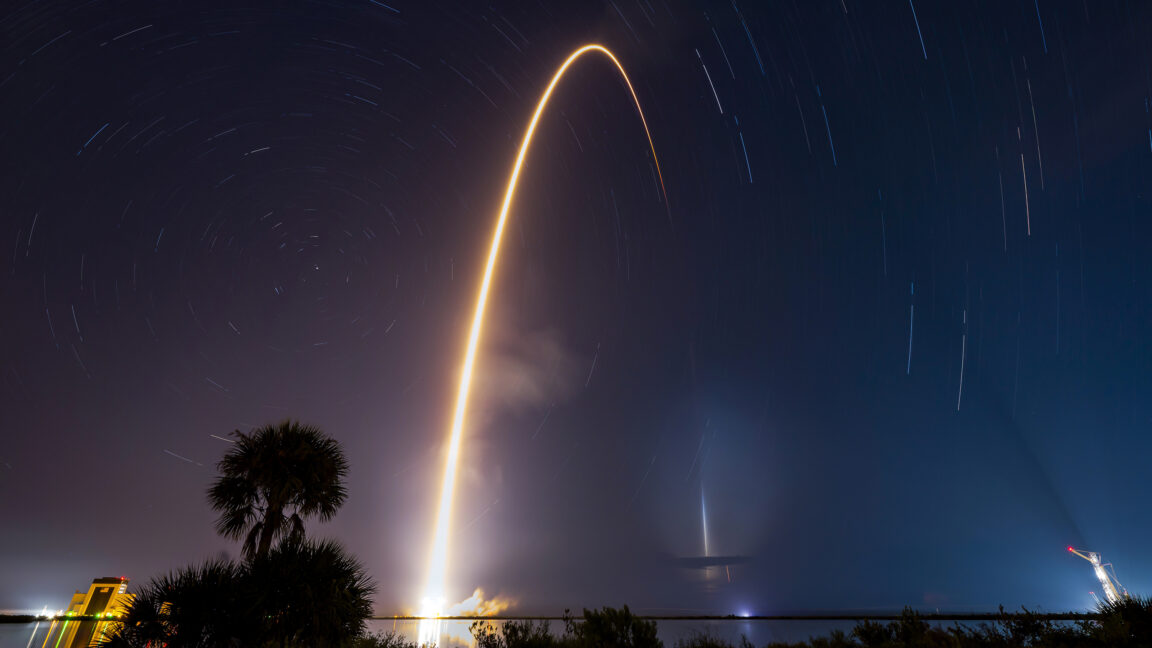
SpaceX delays Starship's Florida launch while MIT tech enables crystal-clear lunar livestreams. Meanwhile, underwater robots struggle with visibility issues, and humanoid robot competitions highlight both impressive advancements and considerable hurdles.
Robots Push Boundaries: From Underwater Exploration to Space Tourism
The world's busiest spaceport is about to get a lot quieter, at least for now. SpaceX aims to launch Starship from Florida by the end of the year, but 2027 seems more likely given the complexities involved. This delay highlights the immense technical challenges that even the most advanced space technology faces. While the anticipation for Starship's maiden voyage to orbit or beyond is building, the journey hasn't yet begun. According to recent reports, the Falcon 9 rocket's booster that launched NASA's DART spacecraft earlier this month has successfully landed back at Cape Canaveral Space Force Station, marking another step in the efficient recovery of launch vehicles. This capability underpins SpaceX's ambitious goals, allowing for rapid reuse and reducing the overall cost of access to space.
Navigating the Depths: Challenges in Underwater Robotics
While space enthusiasts await the next giant leap, other forms of robotics are pushing boundaries in equally demanding environments: the deep sea. A significant hurdle faced by remotely operated vehicles (ROVs) conducting deep-sea operations is visibility. When these vehicles settle on the seafloor or disturb sediments during excavation, they kick up clouds of silt and clay that severely degrade onboard cameras' ability to see clearly. Often, the only option is to wait for the turbidity to clear naturally, significantly slowing down operations and limiting the data collected.
Researchers at MIT, led by Amy Phung, SM ’23, PhD ’26, are tackling this murky visibility challenge. Their innovative system aims to pierce the haze, potentially revolutionizing underwater exploration and resource extraction. This technology could enable faster inspection, maintenance, and surveying in challenging underwater conditions, opening doors to deeper exploration and more efficient operations without the costly delays caused by poor visibility. The implications for fields like marine biology, archaeology, and the oil and gas industry are substantial.
Reaching for the Moon: Advanced Communications on Artemis II
In stark contrast to the underwater challenges, NASA's Artemis II mission demonstrated a remarkable leap in space communication technology. During the original US missions to the moon in the 1960s and '70s, astronauts relied on radio-frequency systems that transmitted grainy, low-quality images and videos back to Earth. The signal strength and bandwidth were severely limited by the technology of the era.
Fast forward to 2026, and the Orion spacecraft carrying astronauts on the Artemis II mission, launched in April, showcased a completely different experience. Spacecraft transmissions provided crystal-clear footage at data rates comparable to modern home internet connections. The mission's live stream was a testament to technological advancement, offering viewers unprecedented visual access to the astronauts' journey. This breakthrough relies on significantly more powerful transmitters and advanced signal processing, potentially enabling higher fidelity communications for future deep space missions, including potential support for astronauts on the lunar surface.
On Earth, Robots Face the Gauntlet
Meanwhile, back on Earth, the world's humanoid robot games concluded with spectacular displays of engineering prowess and, occasionally, spectacular failure. These competitions serve as a proving ground for robotics technology, showcasing advancements in dexterity, balance, and artificial intelligence. Robots competed in tasks requiring agility and precision, with some models breaking records and others bursting into flames under the harsh lighting and challenging course conditions.
Interestingly, the article notes that record-breaking robot races are less substantial than household chore challenges, suggesting that truly practical applications—tasks that mimic everyday human activities—remain a significant challenge. While impressive speed and acrobatics grab headlines, the ability to perform reliably in complex, unstructured environments remains elusive.
Expert Analysis: The Interplay of Robotics, Space, and Underwater Tech
The advancements highlighted by these recent developments underscore a fascinating interplay: the demands of space exploration and underwater research are driving innovation in robotics and communication technologies, and vice versa. The need for reliable, high-bandwidth communication for deep space missions has spurred improvements in data transmission that could benefit terrestrial applications. Similarly, the challenges of operating robots in extreme pressure and darkness underwater are forcing engineers to develop solutions that enhance capabilities for space robots.
However, the delays with Starship and the persistent visibility issues for underwater ROVs remind us that progress is not linear. Engineering breakthroughs often require iterative cycles of design, failure, and refinement. The ability to transmit high-quality video from lunar orbit demonstrates mastery in one domain, while the challenge of seeing through murky water points to a different set of mastery requirements in another.
The humanoid robot competitions provide an interesting third perspective. They highlight the public fascination with anthropomorphic machines and offer a benchmark for assessing progress. Yet, their limitations—robots bursting into flames, struggling with simple tasks—underscore the gap between impressive demonstrations and reliable, widespread deployment.
Implications and the Road Ahead
These varied developments point towards a future where robotics will play an increasingly central role in exploration, both celestial and oceanic. Starship's eventual launch promises to revolutionize access to space, potentially enabling more ambitious scientific missions and paving the way for future human exploration. The MIT-developed underwater vision technology could preempt costly delays and enable more efficient deep-sea operations. The improvements in space communications will support longer, more complex missions beyond low Earth orbit.
The humanoid robot field continues to evolve, with competitions pushing the envelope and researchers focusing on practical applications. Bridging the gap between these impressive capabilities and robust, everyday functionality will be crucial.
Conclusion: A Convergence of Challenges and Opportunities
From the quiet contemplation of a delayed space launch to the high-stakes environment of robotic competitions, and the murky depths where visibility is the enemy, robotics technology is being tested and refined in environments that mirror some of Earth's most challenging conditions. The progress seen in communication technologies for space missions and vision systems for underwater exploration showcases remarkable engineering ingenuity. However, the persistent hurdles—whether it's visibility underwater, reliability in space, or practical task execution by humanoid robots—serve as reminders that the path to fully autonomous and capable robotic systems is still underway. As these technologies converge, they promise to unlock new frontiers in our understanding of the cosmos and the planet, but the journey requires continued innovation and acceptance of setbacks.
##