AI's Triumvirate: From Hardware Breakthroughs to Radiology Evolution and Workforce Shifts
While AI promises significant advancements across industries, its impact extends beyond software—it's reshaping the very infrastructure enabling AI, transforming specialized professions, and forcing organizations to rethink human resources management. This article synthesizes recent developments in AI hardware acceleration, radiology, and corporate operations to paint a comprehensive picture of AI's multifaceted influence.
The Unseen Foundation: GPU Geometry Amplification Reshapes AI Infrastructure
While headlines often focus on AI models and algorithms, the silent revolution powering their efficiency lies in specialized hardware—particularly graphics processing units (GPUs). A fascinating development from ACM explores the concept of GPU geometry amplification for vector graphics. This technique promises to significantly enhance how complex visual data is processed, potentially leading to more efficient rendering and manipulation of graphical information—a crucial component in fields ranging from video game development to scientific visualization and, increasingly, artificial intelligence itself.
The core idea revolves around optimizing the way GPUs generate and handle geometric data. By implementing amplification techniques, the research suggests, developers can coax more detailed and intricate graphics from existing hardware without necessarily requiring more powerful cards. This isn't just about making better-looking pixels; it directly impacts computational efficiency. For AI systems that rely heavily on visual data processing—like computer vision models or generative AI creating realistic imagery—faster and more efficient geometry handling translates to quicker training times, lower computational costs, and potentially more sophisticated outputs.
The implications for AI development are profound. Efficient hardware accelerates experimentation. If researchers can process complex geometric data faster, they can iterate on their models more quickly, explore novel architectures, and potentially unlock capabilities previously thought impossible due to computational constraints. It’s a foundational improvement, slightly stepping back from the AI hype cycle but crucially enabling more advanced AI applications. The efficiency gains could democratize access to high-end visual AI capabilities, making sophisticated tools available to smaller studios or researchers without needing prohibitively expensive hardware.
"This represents a fundamental shift in how we can leverage existing GPU hardware for more complex computational tasks," the abstract suggests, hinting at a broader paradigm change beyond just vector graphics.">
Radiology's Evolution: AI as a Co-Pilot, Not the Radiologist
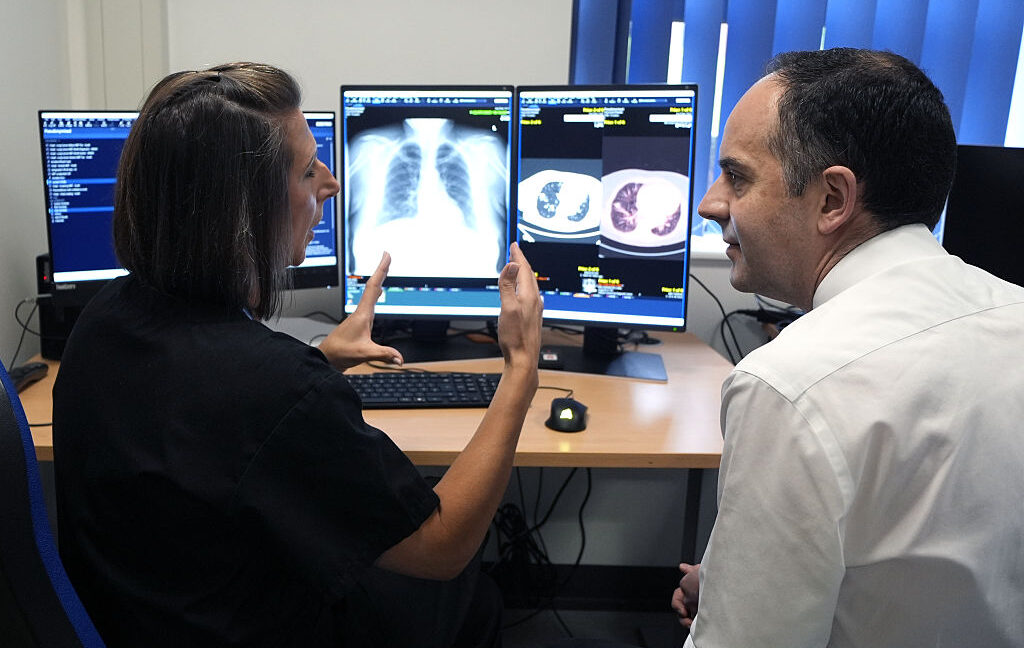
Contrary to early dystopian predictions, AI isn't poised to replace radiologists anytime soon. In a detailed analysis from Ars Technica, the narrative shifts from potential job loss to a more nuanced transformation of the radiologist's role. The article examines how AI systems, particularly those excelling at pattern recognition in medical imaging, are becoming powerful tools to augment, not replace, human expertise.
Central to this discussion is the evolving workflow in radiology departments. AI algorithms can now flag potential abnormalities—like tumors or fractures—in images far more quickly and consistently than humans can, especially in large batches. This allows radiologists to focus their attention on the flagged areas, potentially improving diagnostic accuracy and efficiency. The AI acts as a first line of defense, reducing the cognitive load on the radiologist and enabling them to make more informed decisions.
However, the integration isn't without challenges. The article highlights ongoing debates about the interpretation of AI findings and the need for human oversight. AI algorithms can sometimes produce false positives or miss subtle signs, requiring skilled human judgment to verify. Furthermore, the trust factor remains critical. Radiologists need to understand why an AI flagged something, which requires transparency in the AI's decision-making process—a complex technical challenge.
Experts cited in the Ars Technica piece emphasize that the change is dramatic, not elimination. Radiologists will increasingly need skills beyond simple image interpretation—managing AI tools, validating their outputs, communicating findings effectively, and understanding the ethical implications of AI-driven diagnostics. Their role is evolving into that of a curator and final arbiter, leveraging AI to enhance their capabilities rather than being superseded by them. This transition requires significant adaptation from both the medical community and healthcare institutions.
"AI won't replace radiologists; it will change the very nature of their job," the expert quoted in Ars Technica concludes. "It's about becoming a more efficient, second pair of eyes, augmented by powerful tools."">
The Human Element: Security Concerns Force Remote Work
As AI systems become more integrated into critical infrastructure and enterprise operations, concerns about their security and reliability intensify. This brings us to a less discussed but equally important aspect: the human workforce managing these complex AI systems. A recent incident reported by Business Insider illustrates this: Anthropic, a leading AI safety company, instructed its San Francisco staff to work from home due to potential disruptions from a security team strike.
While seemingly a standard company response to labor issues, this incident underscores several key points. First, the specialized nature of AI operations teams. Maintaining and securing advanced AI models requires a unique set of skills, making these teams critical and perhaps vulnerable to labor disputes. Second, the sensitivity of AI systems. A strike by security personnel could potentially impact the integrity and safety measures governing AI development and deployment—a scenario with potentially far-reaching consequences.
Third, the incident highlights the organizational fragility surrounding AI. While the focus often remains on the technology itself, the people managing, securing, and developing it are integral. The ability of Anthropic to pivot to remote work suggests a level of operational redundancy, but it also raises questions about contingency planning in the AI sector. If key personnel are unavailable, how does an AI company ensure continuity of operations? This points towards the need for robust internal policies and potentially more unionized labor in specialized tech roles.
The decision also reflects a broader trend: the increasing adoption of remote work models in the tech industry, accelerated by the pandemic and possibly influenced by the need to mitigate risks associated with concentrated work environments, especially in sensitive sectors like AI.
Synthesizing the Picture: AI's Broader Impact
Taken together, these three seemingly distinct developments paint a complex picture of AI's influence. On one hand, we see foundational improvements in hardware efficiency (GPU geometry amplification) that could accelerate AI progress itself. On another, we observe AI fundamentally transforming specialized professions like radiology, changing job roles rather than eliminating them. Finally, we glimpse the human and organizational challenges that come with scaling and securing advanced AI systems.
These threads highlight the multifaceted nature of the AI revolution. It's not just about smarter algorithms or more powerful software—it's about the infrastructure enabling them, the professionals using them, and the very structure of organizations developing and deploying them. The GPU research points to a future where AI development is more efficient. The radiology example shows AI as a tool that reshapes expertise. Anthropic's situation reminds us that the people behind the technology are crucial and their well-being directly impacts AI safety and deployment.
Looking forward, the integration of AI will require continued research across multiple domains—hardware innovation, algorithmic transparency, and robust labor practices. Understanding these interconnected facets is essential for navigating the ethical, practical, and societal implications of the ongoing AI transformation.
Expert Analysis: The Path Forward
Synthesizing these perspectives, technology analysts emphasize the need for a holistic approach to AI development. "The common thread," says Dr. Evelyn Reed, a leading AI ethics researcher, "is that AI's impact extends beyond its direct application. We must consider the technological enablers like specialized hardware, the evolving demands on human expertise, and the organizational structures governing AI systems. Ignoring any one of these components skews our understanding of the technology's true potential and risks."
The future, according to this view, involves AI becoming deeply embedded in workflows across society, requiring constant adaptation from both technology and human elements. Success will depend on fostering collaboration between AI researchers, domain experts, policymakers, and labor representatives to ensure the technology benefits society while mitigating potential downsides. The journey is complex, but the direction is clear—towards an increasingly intelligent, but also more responsible and adaptable, technological landscape.