The Twin Engines of the AI Era: SK Hynix's Trillion-Dollar IPO and the Quantum Leap
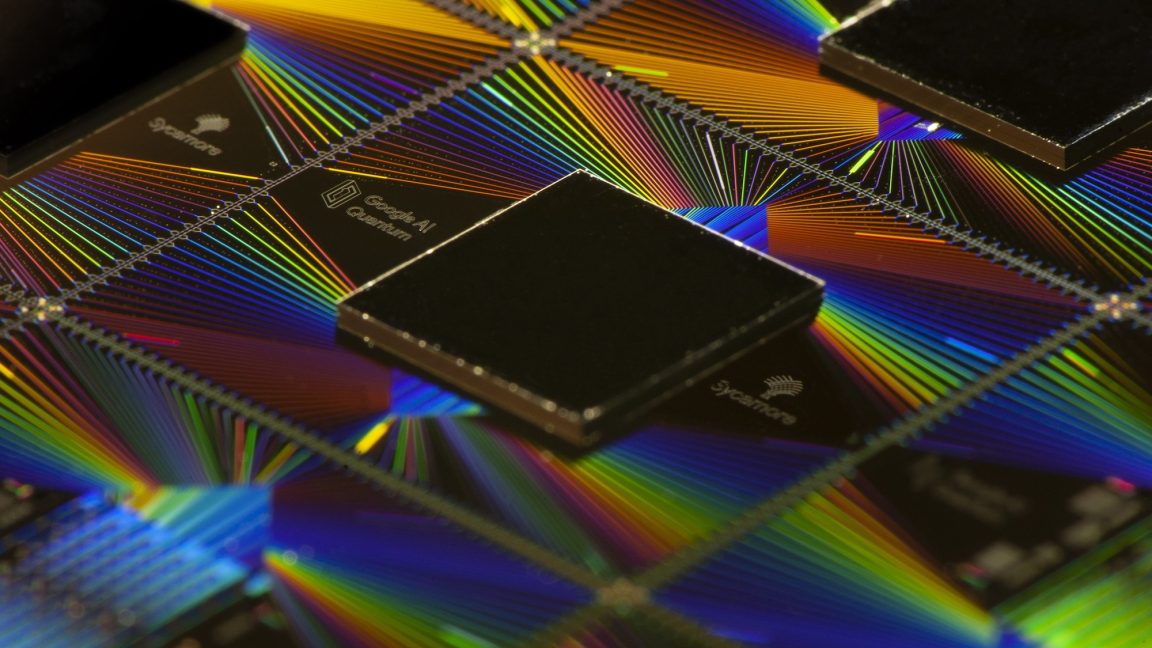
As SK Hynix shatters IPO records with a $26.5 billion debut, the semiconductor industry faces a paradox: massive demand for classical memory fuels a boom, while quantum computing startups race to solve the error-correction bottleneck. This analysis explores how these parallel developments are reshaping the global tech landscape.
The Twin Engines of the AI Era: SK Hynix's Trillion-Dollar IPO and the Quantum Leap
The global technology landscape is currently witnessing a historic bifurcation in hardware investment. On one side, the immediate, insatiable demand for AI infrastructure has propelled SK Hynix to a staggering $26.5 billion IPO, marking the largest debut by a foreign company in U.S. history. On the other, a quieter but equally revolutionary revolution is brewing in the quantum realm, where new breakthroughs in error correction promise to finally make viable quantum computers a reality. Together, these developments signal a future where classical computing scales to its absolute limits while quantum systems prepare to take the baton.
The Memory Gold Rush: SK Hynix's Wall Street Debut
The most tangible manifestation of the AI hardware boom is the recent market performance of SK Hynix. As a primary supplier of HBM (High Bandwidth Memory) to Nvidia, the South Korean chipmaker has become the backbone of the generative AI revolution. Its debut on Wall Street was nothing short of spectacular, opening at $170 per share and raising $26.5 billion, a figure that surpassed even Alibaba's previous record for a foreign listing.
"The AI chip boom just produced its biggest Wall Street moment yet."
This financial milestone is not merely a corporate victory; it is a geopolitical signal. The sheer scale of capital raised has immediately drawn the attention of U.S. policymakers. As reported by TechCrunch, there is now intense pressure on SK Hynix, and its rival Samsung, to accelerate the construction of new fabrication plants (fabs) within the United States. The logic is clear: if the world's most critical AI hardware relies on memory chips produced abroad, national security and supply chain resilience demand a shift in manufacturing geography. The IPO is effectively a down payment on a new era of semiconductor nationalism, where capital flows are directed not just by profit margins, but by strategic imperatives.
However, this boom highlights a critical bottleneck. The current AI architecture, dominated by Nvidia's GPUs, is entirely dependent on the speed and capacity of memory. SK Hynix's success underscores that we are hitting the physical limits of classical scaling. We are building taller towers, but the foundation is straining. This is precisely where the second engine of the AI era enters the narrative.
The Quantum Horizon: Solving the Error Correction Puzzle
While SK Hynix addresses the immediate needs of classical AI, a parallel track of innovation is tackling the fundamental limitations of physics. The path to practical quantum computing has long been blocked by the issue of decoherence and error rates. Quantum bits (qubits) are notoriously fragile, easily disrupted by environmental noise. Until recently, the consensus was that we would need millions of physical qubits to create a single, stable logical qubit.
That narrative is shifting. Recent advancements in quantum error correction are proving that processors can be constantly recalibrated using reinforcement learning. According to research highlighted by Ars Technica, these systems use error information to dynamically adjust control algorithms in real-time. This means a quantum processor can effectively "self-heal," correcting its own errors as they occur, rather than requiring a massive overhead of redundant qubits.
This breakthrough has emboldened the startup ecosystem. Oratomic, a quantum computing firm, recently secured a massive $300 million funding round, co-led by ARCH Venture Partners, Spark Capital, and Khosla Ventures. Their thesis is bold: a viable, fault-tolerant quantum computer may not require the previously feared millions of qubits. Instead, they are targeting a system that functions effectively with only 20,000 qubits.
"The massive round was co-led by ARCH Venture Partners, Spark Capital, and Khosla Ventures."
This reduction in complexity is transformative. If Oratomic and similar firms can achieve logical stability with such a manageable number of qubits, the timeline for commercial quantum advantage shrinks dramatically. We are moving from theoretical physics to engineering reality.
Synthesis: The Convergence of Classical and Quantum
The juxtaposition of SK Hynix's record-breaking IPO and Oratomic's quantum funding round reveals a sophisticated maturity in the tech industry. Investors are no longer betting on a single horse. They are hedging across the entire spectrum of computing power.
The SK Hynix IPO represents the scaling of the present. It validates the current AI paradigm, proving that the demand for high-bandwidth memory is so intense that it can command the largest capital raise in decades. It is a testament to the efficiency of classical computing, pushed to its absolute zenith through specialized hardware like HBM.
Conversely, the quantum advances represent the optimization of the future. The ability to correct errors via reinforcement learning suggests that the "noisy" intermediate-scale quantum (NISQ) era is ending. We are approaching a point where quantum computers can solve problems that are mathematically impossible for even the most powerful classical supercomputers, specifically in drug discovery, materials science, and complex optimization.
The Road Ahead
The implications of this dual-track progress are profound. As SK Hynix builds new U.S. fabs to feed the current AI hunger, the quantum sector is quietly laying the groundwork for the post-AI era. The policy push for domestic manufacturing will likely extend to quantum hardware as well, given its strategic importance.
We are standing at a unique inflection point. The next decade will likely see classical computing hitting a plateau in raw performance gains, forcing industries to migrate specific workloads to quantum systems. The $26.5 billion raised by SK Hynix is the fuel for the next five years of AI growth, while the $300 million flowing into Oratomic is the seed for the next fifty years of computing evolution. The hardware boom is not a single wave; it is a dual tide, lifting the ships of the present while charting the course for the future.
As we move forward, the question is no longer whether quantum computing will work, but how quickly we can integrate it with the classical infrastructure that SK Hynix is currently helping to build. The synergy between these two giants of hardware innovation will define the technological trajectory of the 21st century.
Sources
- Quantum error correction can constantly recalibrate a processor
- Nvidia’s biggest RAM supplier just had a trillion-dollar debut on Wall Street
- SK Hynix raises $26.5B in the biggest foreign IPO in US history, is urged to build new US fabs
- Oratomic raises $300M to build a viable quantum computer that needs only 20K qubits