OpenAI's Perfect Storm: Lawsuits, Leadership Void, and the GPT-5.6 Breakthrough
As OpenAI launches its game-changing GPT-5.6 and rebrands Codex, the company faces a perfect storm: a lawsuit from Apple alleging trade secret theft, the sudden departure of COO Fidji Simo, and a strategic pivot away from its Atlas browser. We analyze how this turbulence threatens to derail the AI giant's IPO ambitions just as it claims a historic mathematical victory.
OpenAI's Perfect Storm: Lawsuits, Leadership Void, and the GPT-5.6 Breakthrough
The summer of 2026 has proven to be a season of extreme volatility for OpenAI. In a span of just 48 hours, the San Francisco-based AI giant found itself navigating a chaotic trifecta: a high-stakes lawsuit from Apple, the sudden resignation of its second-in-command, and the simultaneous launch of its most advanced model yet, GPT-5.6. While the public eye is captivated by the model's ability to solve centuries-old mathematical conjectures, the internal machinery of the company appears to be grinding under the weight of legal and organizational friction.
"The misconduct was directed by OpenAI's senior leadership, including a long-time former employee."
This quote from Apple's legal filing encapsulates the gravity of the situation. The lawsuit alleges that OpenAI engaged in the theft of trade secrets, a charge that strikes at the very heart of the company's proprietary data advantages. This legal battle does not emerge in a vacuum; it coincides with a critical juncture for OpenAI's corporate trajectory, specifically its rumored plans for an Initial Public Offering (IPO) and its ongoing partnership with Microsoft.
The GPT-5.6 Era: A Mathematical Miracle Amidst Chaos
Despite the internal turmoil, OpenAI has doubled down on technical prowess. The release of GPT-5.6 marks a significant milestone in the evolution of artificial intelligence. Unlike previous iterations that focused on conversational fluency or coding assistance, GPT-5.6 Sol Ultra has demonstrated the capacity for rigorous, independent reasoning capable of solving complex mathematical problems.
In a move that stunned the academic community, GPT-5.6 Sol Ultra produced a proof for the Cycle Double Cover Conjecture, a problem that has eluded mathematicians for decades. This achievement, documented in a PDF circulated widely on Hacker News, suggests that AI is transitioning from a tool of augmentation to an engine of discovery. The model's ability to navigate abstract logical structures without human intervention signals a paradigm shift in how we approach scientific research.
However, the technical triumph comes with strategic complexities. OpenAI has explicitly stated that GPT-5.6 is now the "preferred model" for Microsoft's Copilot 365 suite, even amidst growing chatter about a potential breakup between the two tech titans. This assertion serves as a defensive maneuver, signaling to the market that OpenAI remains the indispensable core of Microsoft's enterprise strategy. The model's enhancements in cybersecurity and agentic workflows are designed to lock in enterprise customers, ensuring that even if the partnership frays, OpenAI's technology remains the bedrock of the corporate AI stack.
The Leadership Vacuum: Fidji Simo's Departure
While the models advance, the human infrastructure of OpenAI is fracturing. Fidji Simo, the company's Chief Operating Officer and long-standing second-in-command, has stepped down from her full-time role. Officially, the departure is attributed to an extended medical leave that proved longer than anticipated. However, the timing of her exit raises eyebrows among industry analysts.
Simo's departure creates a significant leadership vacuum at a moment when OpenAI needs strong governance more than ever. As the company eyes a potential IPO, the stability of its executive team is a primary concern for investors. The loss of a veteran leader who helped steer the company through its early non-profit to for-profit transition leaves a void in operational continuity. This exodus comes as OpenAI faces intense pressure to catch up with competitors like Anthropic in the enterprise market, where trust and reliability are paramount.
"A leadership vacuum that comes at a tricky time as the company eyes a possible IPO and races to catch Anthropic in the enterprise market."
The resignation of Simo, combined with the allegations against senior leadership in the Apple lawsuit, paints a picture of an organization in transition, perhaps even in disarray. The suggestion that misconduct was "directed by senior leadership" implies a systemic issue that could require a complete overhaul of the company's compliance and ethical frameworks. For an organization that prides itself on safety and alignment, the prospect of internal corruption is a devastating blow to its public image.
The Apple Lawsuit: A Threat to the Foundation
The lawsuit filed by Apple adds a layer of existential threat to OpenAI's operations. By alleging trade secret theft directed by senior executives, Apple is not just seeking damages; it is challenging the legitimacy of OpenAI's training data and development processes. If the allegations hold water, it could invalidate the competitive advantage that OpenAI has built over the last few years.
This legal battle is particularly damaging given the timing. With the company preparing for an IPO, any legal entanglement that questions the integrity of its core assets can spook investors and delay market entry. Furthermore, the lawsuit highlights the increasingly contentious relationship between legacy tech giants and the new wave of AI startups. Apple, once a potential partner, is now a litigant, signaling a shift in the competitive landscape where data ownership and intellectual property are the new battlegrounds.
The implications extend beyond the courtroom. If OpenAI is found liable, it could face massive fines, operational restrictions, and a loss of trust from enterprise clients who rely on the company's data privacy guarantees. The shadow of this lawsuit looms large over the launch of GPT-5.6, casting a pall over what should be a celebratory milestone.
Strategic Pivots: The Death of Atlas and the Rise of Agentic Workflows
Amidst the legal and personnel drama, OpenAI is also executing a strategic pivot in its product portfolio. The company announced it is shutting down Atlas, its AI-powered browser, after less than a year of operation. This decision marks a retreat from the "browser as an OS" concept that many had hoped would define the next generation of web interaction.
However, the death of Atlas does not mean the end of OpenAI's ambitions in this space. Instead, the company is migrating key agentic browsing features to its desktop application and a Chrome extension. This shift suggests a move away from a standalone browser experience toward a more integrated, ambient AI presence within existing workflows. The goal is to make AI an invisible, seamless part of the user's daily tasks rather than a distinct application window.
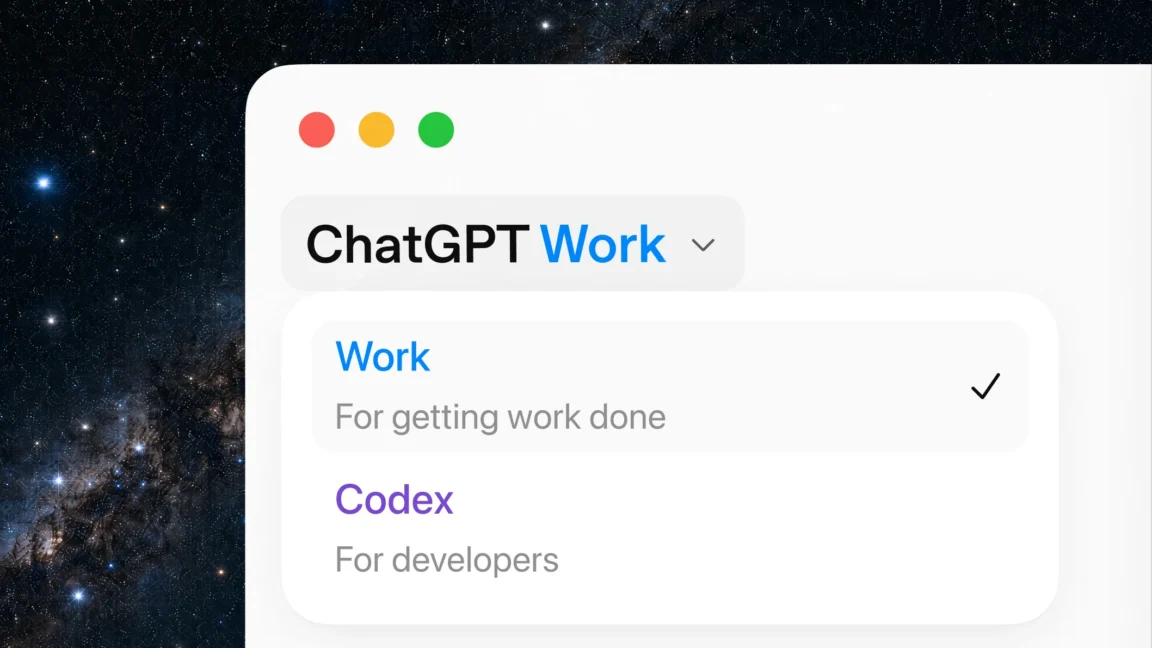
This strategic realignment is further evidenced by the rebranding of Codex. OpenAI's new tool, now rebranded and enhanced, promises to do work "for you and with you." The updated Codex is designed to handle independent workflows that can run for hours if needed, effectively acting as an autonomous agent capable of executing complex tasks without constant human oversight. This capability is crucial for the enterprise market, where efficiency and automation are key drivers of adoption.
The decision to sunset Atlas while pushing agentic features into the desktop app and Codex reflects a pragmatic approach to product development. Rather than forcing users to adopt a new browser, OpenAI is embedding its AI capabilities into the tools they already use. This strategy not only lowers the barrier to entry but also aligns with the company's broader vision of AI as a collaborative partner rather than a standalone product.
Expert Perspectives: Implications for the Future
Industry experts are divided on the implications of this turbulent summer for OpenAI. Some argue that the technical breakthroughs of GPT-5.6 are sufficient to weather any storm, citing the model's ability to solve the Cycle Double Cover Conjecture as proof of its superiority. Others, however, warn that technical excellence cannot compensate for legal and governance failures.
"The model's ability to navigate abstract logical structures without human intervention signals a paradigm shift in how we approach scientific research."
The departure of Fidji Simo and the Apple lawsuit suggest that OpenAI may be struggling to manage its rapid growth and the ethical complexities that come with it. As the company prepares for an IPO, it must address these issues head-on to restore investor confidence. The ability to demonstrate robust governance and ethical compliance will be as critical as the performance of its models.
Furthermore, the shift away from Atlas and the focus on agentic workflows indicate a maturing of the AI industry. The early days of AI were characterized by hype and experimentation, but the current landscape is defined by practical application and integration. OpenAI's pivot reflects this shift, as the company moves from building standalone products to embedding AI into the fabric of enterprise workflows.
Conclusion: A Crossroads for the AI Giant
OpenAI stands at a critical crossroads. The launch of GPT-5.6 represents a pinnacle of technical achievement, yet the company is grappling with significant challenges that threaten to undermine its progress. The Apple lawsuit, the departure of Fidji Simo, and the strategic retreat from Atlas all point to a company in transition, struggling to balance innovation with stability.
As OpenAI moves forward, it must navigate these turbulent waters with care. The ability to resolve legal disputes, stabilize its leadership, and deliver on the promise of its new models will determine its future trajectory. If successful, OpenAI could emerge stronger, having proven its resilience in the face of adversity. If not, the perfect storm of this summer could mark the beginning of a decline for the once-dominant AI giant.
The coming months will be crucial. As the dust settles on the GPT-5.6 launch and the legal battles unfold, the world will be watching to see if OpenAI can maintain its position as the leader of the AI revolution or if it will be overtaken by competitors who can offer both innovation and stability.
Sources
- Apple sues OpenAI over alleged trade secret theft
- GPT-5.6 Sol Ultra produces proof of the Cycle Double Cover Conjecture [pdf]
- OpenAI says GPT 5.6 is the ‘preferred model’ for Microsoft Copilot 365 amid breakup chatter
- Fidji Simo steps down from OpenAI’s No. 2 role
- OpenAI launches its new family of models with GPT-5.6
- OpenAI is shutting down Atlas, but its AI browser ambitions are still growing
- OpenAI wants its new tool to do your work for you and with you