From Jumping Dog-Cams to $130B Valuations: The Hardware Renaissance of Space and AI Robots

As Blue Origin secures a historic $10 billion raise and Venus Aerospace pushes engine boundaries, a parallel revolution is unfolding in robotics. From Mistral's navigation models to consumer-grade jumping dogs, we analyze the convergence of massive capital, advanced autonomy, and accessible hardware.
The Twin Engines of a New Era: Capital and Code
The landscape of high-tech hardware is undergoing a seismic shift, characterized by an unprecedented convergence of massive capital inflows and rapid advancements in artificial intelligence. For years, the narrative of the tech sector was dominated by software abstraction and cloud services. Today, however, the story is being written in steel, silicon, and rocket fuel. We are witnessing a renaissance where the boundaries between space exploration and terrestrial robotics are blurring, driven by a shared reliance on autonomy and fueled by investor confidence that has reached stratospheric levels.
The Capital Surge: Blue Origin and the New Space Economy
The most tangible indicator of this resurgence is the flow of capital into deep-tech hardware. In a move that signals a massive vote of confidence in the future of commercial spaceflight, Blue Origin is reportedly raising $10 billion at a staggering $130 billion pre-money valuation. According to reports from The New York Times and Ars Technica, this funding round involves heavyweights like Coatue Asset Management and Jeff Bezos himself.
"This is the first time Blue Origin is expected to raise private capital on this scale, marking a pivotal shift from a cash-burn incubator to a publicly traded powerhouse."
This injection of liquidity is not merely about keeping the lights on; it is an acceleration of the timeline for orbital infrastructure. With such a valuation, Blue Origin is positioning itself not just as a competitor to SpaceX, but as the backbone of a future economy that extends beyond Earth's atmosphere. The sheer scale of this funding suggests that the market believes the "new space race" is no longer a speculative gamble but an imminent economic reality.
Parallel to this giant's move, specialized players are also securing significant backing. Venus Aerospace recently closed a $90 million Series B round to develop a "new kind of rocket engine." As noted in their TechCrunch coverage, the philosophy here is clear: "Build a new kind of rocket engine, and the world will beat a path to your door." While Blue Origin focuses on the scale of launch, Venus Aerospace is targeting the efficiency and reusability of the propulsion systems themselves. Together, these developments suggest a maturing ecosystem where funding is flowing not just to the biggest names, but to the innovators solving specific, hard engineering problems.
The Autonomy Revolution: From Code to Concrete
While capital fuels the rockets, artificial intelligence is providing the brains for the machines on the ground. The transition from pre-programmed automation to true, general-purpose autonomy is the defining trend in robotics today. This shift is best exemplified by the release of Mistral's Robostral Navigate, a state-of-the-art robotics navigation model.
Mistral's entry into this space signals that the leading AI labs are no longer content with just generating text or images; they are now tackling the physical world. Robostral Navigate represents a leap forward in how robots perceive and interact with their environment. Unlike older systems that required meticulous mapping and rigid constraints, this model allows robots to navigate complex, unstructured environments with a level of fluidity that previously seemed impossible. The discussion on Hacker News regarding this release highlights a growing consensus: navigation is the next frontier of AI, and solving it unlocks the potential for robots to operate anywhere.
This technological leap is already trickling down to consumer applications, bridging the gap between industrial utility and personal joy. A prime example is the Beni robot dog from Mondo Robotics. Priced at a surprisingly accessible $800, this device is not a utilitarian warehouse bot but a companion that can jump, run, and film your activities. As described in The Verge, it offers a unique proposition: a drone that doesn't buzz annoyingly but bounces like a dog, capable of recovering from "nasty-looking crashes" dozens of times without breaking.
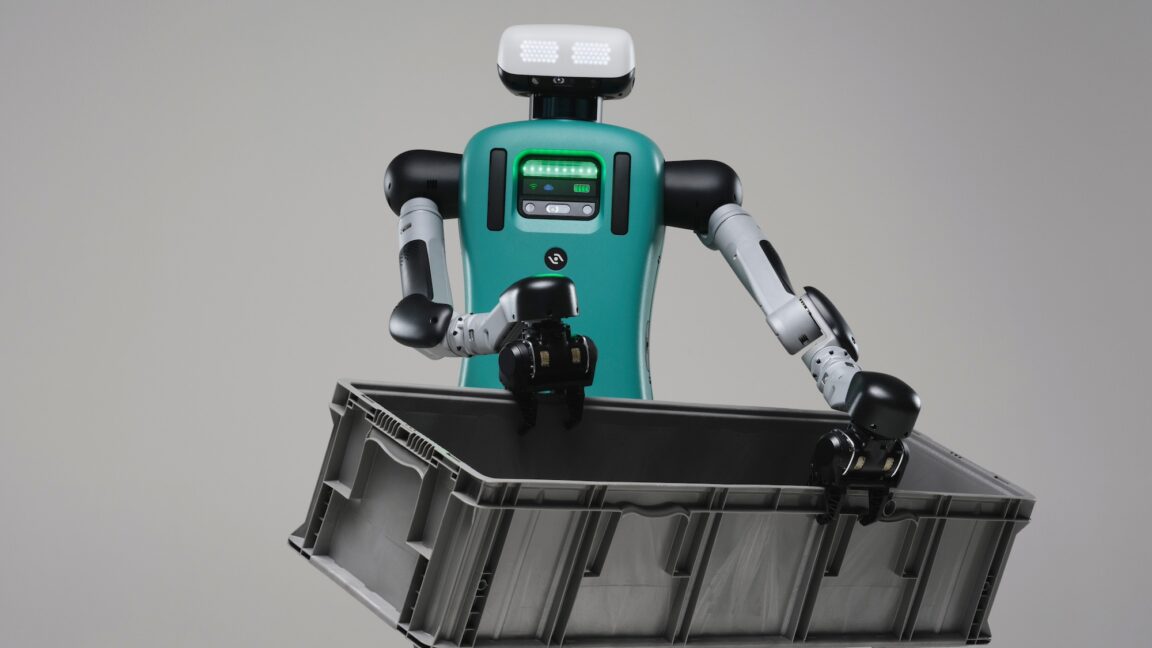
The existence of Beni alongside industrial giants like Agility Robotics (whose Digit robot is often cited in discussions of workplace autonomy) illustrates a critical point: the hardware is becoming robust enough for consumer use, and the AI is becoming smart enough to handle real-world chaos. Ars Technica notes that top researchers believe AI is the key to enabling autonomous robot workers in workplaces—and maybe homes. The convergence of robust hardware and fluid AI navigation means we are moving past the "clumsy robot" era into one of genuine utility.
Synthesis: The Convergence of Space and Robotics
What connects a $10 billion space funding round, a $90 million rocket engine startup, a navigation model from an LLM giant, and an $800 jumping robot dog? The answer lies in the democratization of advanced hardware and autonomy.
The space sector's push for reusability and efficiency (as seen with Venus Aerospace) mirrors the robotics industry's push for general-purpose adaptability. Both fields are solving the same fundamental problem: how to make machines that can operate in unpredictable, dynamic environments without constant human intervention. The capital flowing into Blue Origin validates the high-stakes nature of space, while the funding for Venus and the rapid iteration of AI models like Robostral Navigate validate the viability of the underlying technologies.
Furthermore, the accessibility of hardware is changing. Just as cloud computing democratized software development, the maturation of robotics hardware is democratizing physical automation. The $800 Beni robot dog is a harbinger of this trend. It suggests that the technology once reserved for NASA or military applications is now affordable and reliable enough for a teenager to play with in their backyard. This accessibility accelerates innovation, as a larger pool of developers and users can experiment with these tools.
Expert Perspective: Implications for the Future
The implications of this convergence are profound. We are moving toward a world where the distinction between "space tech" and "robotics" becomes increasingly irrelevant. The navigation algorithms developed for lunar rovers will likely power the delivery robots in your city; the durable materials tested in rocket engines will find their way into consumer drones.
Experts warn, however, that this rapid expansion brings challenges. The sheer scale of capital involved, as seen with Blue Origin's $130B valuation, creates immense pressure to deliver results quickly. If the hardware cannot keep pace with the software promises, we risk a bubble in the physical sector similar to the dot-com crash. Conversely, if the autonomy models like Mistral's Robostral succeed, they could solve labor shortages in logistics, manufacturing, and elderly care, fundamentally reshaping the global economy.
"The future is not just about going to space or building robots; it is about creating a seamless ecosystem where machines can think, move, and adapt as freely as living organisms."
Conclusion: The Dawn of the Physical AI Era
We are standing at the threshold of a new era. The "Space & Robotics Renaissance" is not a distant dream; it is happening now, driven by a perfect storm of capital, innovation, and public enthusiasm. From the orbital ambitions of Blue Origin to the playful resilience of the Beni robot dog, the message is clear: the physical world is being rewired for intelligence.
As funding continues to pour into both the stars and the streets, the next decade promises to be defined by machines that can not only go to the moon but also navigate your living room. The question is no longer if autonomous hardware will transform our lives, but how quickly we can adapt to a world where the line between the biological and the mechanical is permanently blurred. The hardware is ready, the code is evolving, and the capital is waiting. The renaissance has begun.
Sources
- This jumping $800 robot camera dog filled me with joy
- Mistral's Robostral Navigate: a state of the art robotics navigation model
- Venus Aerospace raises $90M Series B to build a new kind of rocket engine
- Blue Origin reportedly raising $10B at $130B valuation
- Blue Origin, for the first time, is expected to raise private capital
- How AI could enable autonomous robot workers in workplaces—and maybe homes