The Agentic Inflection Point: Google's Search Remake, OpenAI's IPO, and the Developer Rebellion
As Google reimagines search with autonomous agents and OpenAI targets a September IPO, the AI industry hits a critical juncture. While corporate giants chase 'vibe coding' and efficiency, a growing chorus of developers and ethicists questions the loss of control, the definition of value, and the speed of this transformation.
The Agentic Inflection Point: Google's Search Remake, OpenAI's IPO, and the Developer Rebellion
The narrative of artificial intelligence has shifted decisively in 2026. We are no longer talking about chatbots that answer questions or image generators that create art. We are entering the era of agentic AI—systems designed not just to respond, but to act, plan, and execute complex workflows autonomously. This shift is not merely a technical upgrade; it is a fundamental restructuring of how we interact with technology, how value is created in the digital economy, and how the software industry defines its own future.
The Death of the Search Bar and the Rise of "Vibe Coding"
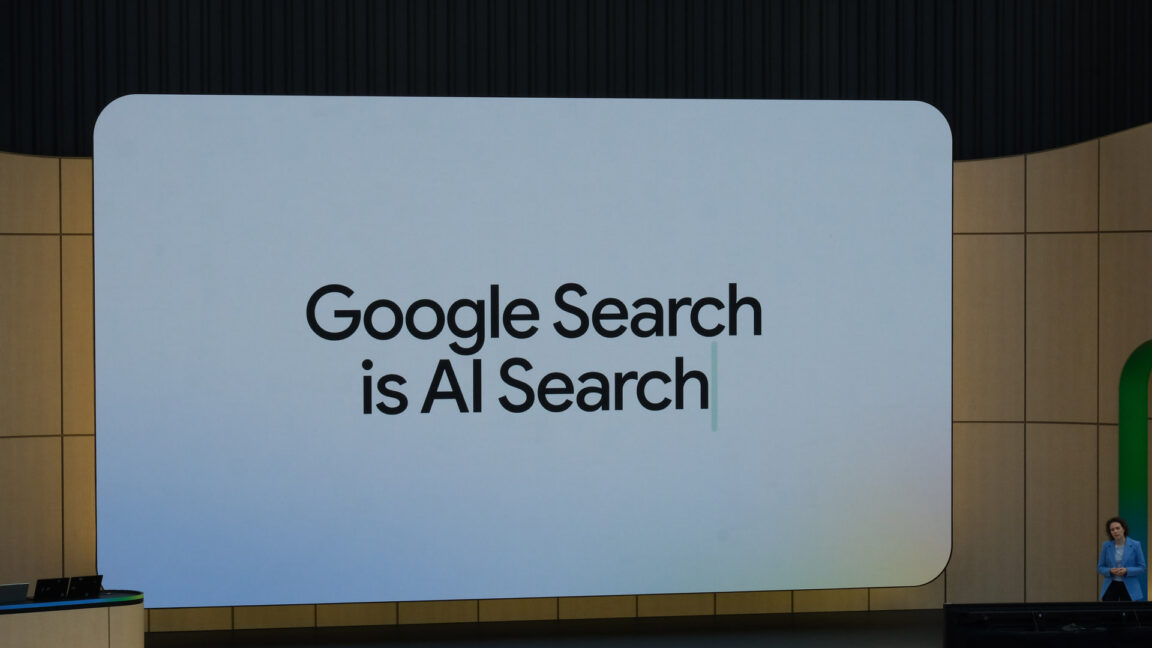
The most visible manifestation of this shift is happening at the very interface of the internet: Google Search. At Google I/O 2026, the tech giant signaled a radical departure from the traditional search paradigm. As reported by Ars Technica, Google is set to remake search with agentic AI, moving away from a list of blue links to a system where the AI acts as a personal agent. It doesn't just find information; it negotiates, books flights, compares prices across platforms, and executes tasks based on high-level intent.
"Google's AI search evolution is accelerating at I/O 2026, promising a future where the user speaks their intent, and the agent handles the rest."
This philosophy extends beyond search into the realm of software development itself. The concept of "vibe coding" is bleeding from desktop environments to mobile devices. The Verge notes that the promise of the App Store—"there's an app for that"—is being reinterpreted. Instead of downloading a specific app for a specific task, users will simply describe the "vibe" or the outcome they desire to their phone, and the agentic system will assemble the necessary tools on the fly. The friction of learning software is being erased, replaced by a conversational interface where the device anticipates needs before they are fully articulated.
This democratization of capability is seductive. It promises to unlock productivity for non-technical users and streamline workflows for power users. However, this seamless integration is sparking a counter-narrative from the very engineers who built the tools. The "vibe" is not working for everyone.
The Developer Pushback: Control vs. Convenience
While the consumer market embraces the ease of agentic systems, the developer community is pushing back with a fervor that suggests a crisis of confidence. A prominent voice in this debate, Jacob Harr, articulated a growing sentiment in his piece "I Don't Vibe Code." The argument is not against AI assistance, but against the erosion of explicit control and the "black boxing" of logic.
For decades, software engineering has been about precision, reproducibility, and understanding the underlying mechanics of a system. "Vibe coding" relies on probabilistic models that may produce the correct output 99% of the time, but fail catastrophically on the 1% that matters. When an agent makes a decision in a sandbox, it is one thing; when that agent is deployed to manage critical infrastructure or financial transactions, the lack of deterministic logic becomes a liability.
"The speed of token generation is impressive, but is it a metric of intelligence or just a metric of confidence?" asked a developer analyzing token speeds on Hacker News.
This skepticism is mirrored in the broader discourse around AI efficiency. As noted in discussions regarding "N tokens per second," the industry is obsessed with speed metrics, often mistaking throughput for intelligence. The developer community argues that in the age of agents, reliability and auditability are far more valuable than raw speed. If an agent executes a complex task in a second but does so via a flawed reasoning path, the result is a fragile system that cannot be maintained or debugged by humans.
Market Volatility: The IPO Rush and the Value of Human Capital
The tension between the promise of automation and the reality of implementation is playing out in the financial markets with explosive volatility. OpenAI, long the poster child for the AI revolution, is reportedly barreling towards an IPO that may happen as early as September. This move comes just a day after Elon Musk lost a lawsuit that threatened OpenAI's structure and leadership. The impending public listing signals a maturation of the sector, but it also invites intense scrutiny on the valuation models that underpin the AI boom.
If the premise of agentic AI is that it can replace human labor, why are companies like OpenAI rushing to the public markets, and why are startups like NanoClaw rejecting buyouts to build their own secure alternatives?
NanoClaw, a secure alternative to OpenClaw, recently turned down a $20 million buyout offer to raise a $12 million seed round instead. The founders of NanoClaw are betting on a future where security and isolation are paramount. Their agents run in sandboxed containers, a direct response to the risks posed by agents running with full privileges on user machines. This decision highlights a critical market segmentation: the rush for efficiency (buyouts) versus the demand for security and sovereignty (independence).
This dynamic was further complicated by recent comments from a banking CEO who suggested replacing "lower-value human capital" with AI, only to walk back the remark shortly after. The backlash was immediate and severe. The incident underscores a growing realization: the definition of "value" in the workforce is shifting, but not in the way executives predicted. The "lower-value" tasks are being automated, but the high-value tasks of oversight, ethics, and system design are becoming more critical, not less.
"Replacing human capital is not a simple equation of efficiency; it is a complex re-evaluation of what human intuition brings to the table."
The market is sending a clear signal: investors are wary of companies that view AI solely as a cost-cutting tool. The successful models are those that use AI to augment human capability, creating new products and markets rather than simply automating old ones.
The Road Ahead: A New Social Contract for AI
As we move deeper into 2026, the "Agentic Shift" is no longer a theoretical concept; it is the operating system of our digital lives. Google is remaking search, OpenAI is preparing for the public eye, and developers are drawing lines in the sand regarding control and safety.
The implications are profound. We are moving toward a world where the barrier to entry for creating software is near zero, but the barrier to entry for understanding and auditing that software is rising exponentially. The "vibe" of the future is not just about ease of use; it is about the trust we place in machines to act on our behalf.
The developer pushback is not a rejection of AI, but a demand for a human-in-the-loop framework. The market volatility around OpenAI and the rise of secure alternatives like NanoClaw suggest that the industry is self-correcting, recognizing that speed and scale without safety are a recipe for disaster.
In the end, the inflection point is not just about the technology itself. It is about the social contract between humans and machines. Will we be the masters of these agents, or will we become the passive observers of their actions? The answer will be written not just in code, but in the policies, regulations, and business decisions made in the coming months. The era of the agent has begun, and the question is no longer if it will change everything, but how we will survive the change.
Conclusion
The AI inflection point of 2026 is defined by a triad of forces: the aggressive push for agentic autonomy by giants like Google, the financial reckoning of the sector as OpenAI heads to IPO, and the principled resistance from the engineering community. As we navigate this new landscape, the winners will be those who can balance the seductive convenience of "vibe coding" with the rigorous demands of security, control, and human oversight. The future is agentic, but it must remain human-centric.
Sources
- Vibe coding is coming to your phone
- Buckle up: Google is set to remake search with agentic AI in 2026
- OpenAI barrels towards IPO that may happen in September
- I Don't Vibe Code
- CEO Walks Back Comment About Replacing 'Lower-Value Human Capital' with AI
- NanoClaw creator turns down $20M buyout offer, raises $12M seed instead
- How fast is N tokens per second really?